
About me
Introducing myself to Substack

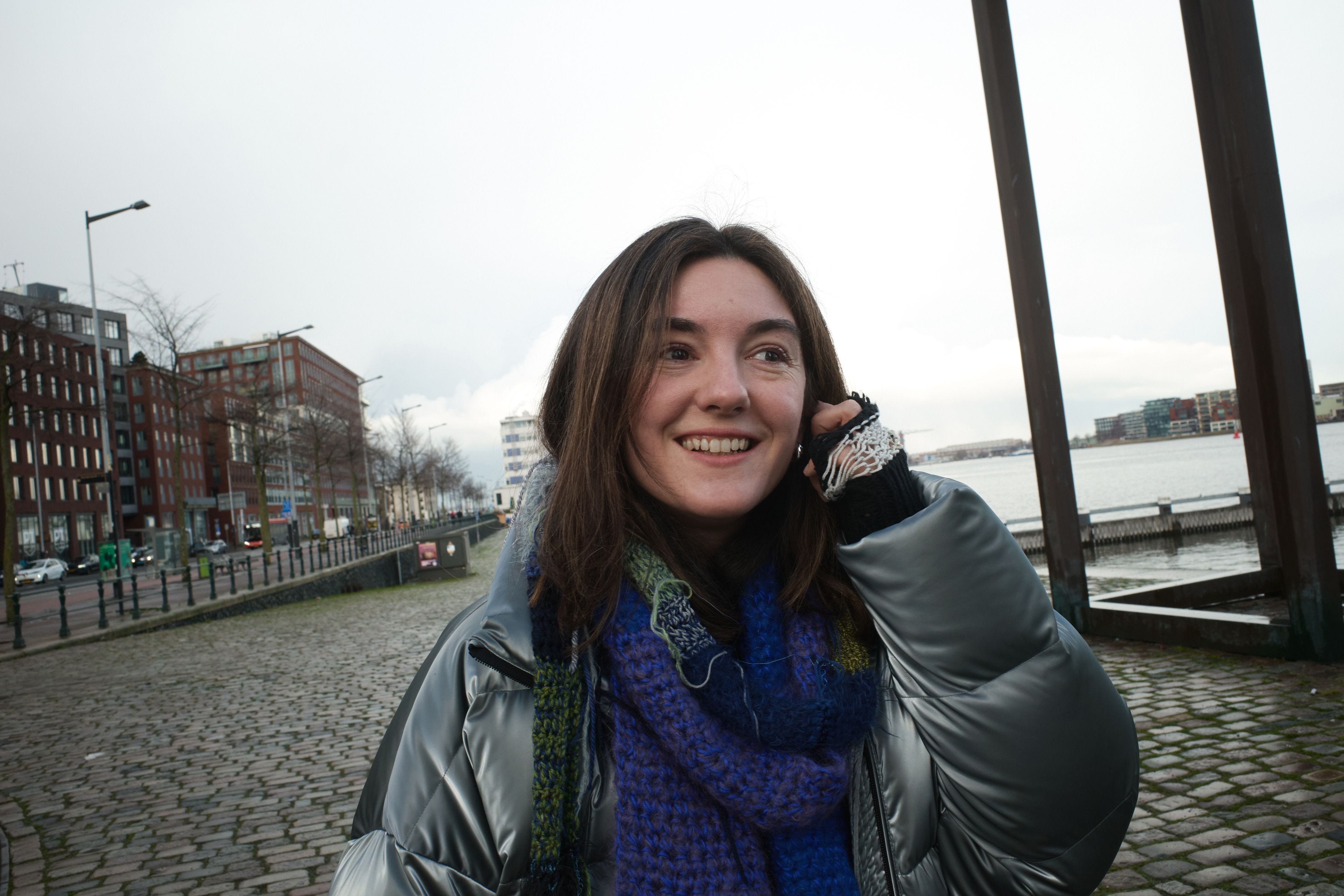
I'm a researcher and a sense-maker. I do complex strategic research grounded in deep understanding of people and deliver insights that give businesses real ideas for growth.
Who I am
I studied to be a designer. At a humanities faculty.
This contradiction explains a lot about how I work. I’ve learned to look at irrationality not with frustration, but with curiosity. Where things don’t add up is usually where the real insights hide.
I’ve worked in design, service design, and consulting and I always brought my personal values to each: depth, humanity, and a healthy dose of self-irony. The corporate world is serious and metric-obsessed. In that environment, it’s easy to lose sight of actual human beings — their irrationality, their workarounds, their real behaviour.
Here’s an example of what I mean.
While conducting interviews with UK entrepreneurs, I noticed that every other person kept their paper receipts in a shoebox. Apparently UK law still requires businesses to store documents for 6 years. We knew from surveys that entrepreneurs had a “document storage problem.” But that sounds generic. Keeping receipts in a shoebox? Now that’s a story with real people behind it. I brought the finding to marketing, and the team built an Instagram campaign around it. The response was exactly what I expected: “you actually get us”
Behind every product, metric, and business problem stands a person.
I know how to see them — and I can talk about what I find just as fluently with a product team as with the C-suite.
What I do
I work on discovery and domain research – the kind that helps businesses see the real depth of a problem. Surface-level problems are almost always symptoms of something bigger. I look for that something — the cause underneath, the question behind the question.
My five-level research framework
To explain my approach better I came up with this simple framework. In my opinion, research happens at five levels:
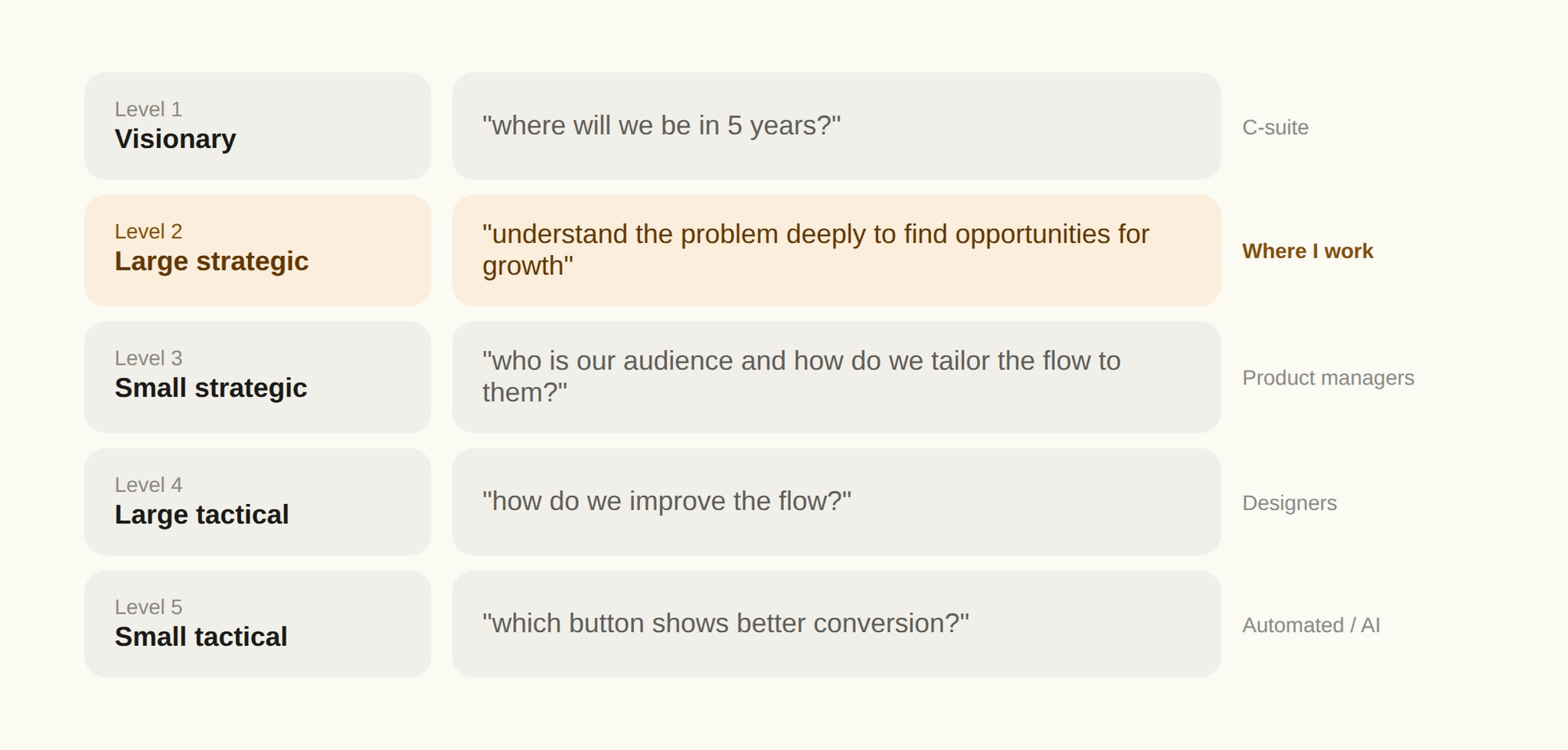
AI has reshaped the discipline and level 5 is now largely automated. Level 4 is often handled by designers. Product managers run their own research at level 3. Level 1 belongs to the C-suite and consultancies.
But between “who is our audience” and “figure out where we’ll be in five years” there’s a gap. That gap is where the most valuable work lives: level 2. At this level, we build a deep understanding of users, we shape the product value and design solutions that actually work. Without knowledge on this level, big bets don’t land.
Throughout my career I’ve worked at every level of this framework. However, level 2 is where most of my projects end up. Not because I drag them there — the temptation exists, and I check myself for it — but because that’s usually where the actual question lives, even when the brief is written at level 3 or 4.
The reason I lead with level 2 it’s that this level is where I’ve consistently created the most value for the businesses I work with. Most briefs are simpler than the problems they describe, simply because writing a level 2 brief is its own piece of work. Part of my job is to spot that gap and bring it up before we commit to answering the wrong question.
For example, in User Archetypes for B2B Banking for Backbase project, the original research request was: “look at the existing personas and figure out how to make them easier for designers to work with.” A level 4 task. After an initial deep-dive and debriefing, I spotted the missing strategic layer and reframed the research question to the level 2: “What will a deeper understanding of these personas give the business? Is there a growth opportunity here?”
Briefs tend to arrive at level 3 or 4 with a surface description of the problem. I find the real diagnosis underneath — and figure out how to treat it, not just name it.
In a Researching the value of chat for Osome, the brief was: “We have a backlog of 40 potential improvements and want to know where to start.” As the research unfolded, the real picture emerged: the team didn’t fully understand customers behaviour. The project output wasn’t just a prioritized backlog. It was a strategic vision for the product.
I answer the question you came with — and find the deeper one underneath it, where the real value lives. In most of my projects, I’ve ended up pulling the work to this level one way or another. That’s not a coincidence. That’s my approach.
How I work
I’m not afraid of people being irrational — I see it as an opportunity. I can conduct interviews on sensitive topics, build trust where there is none, and ask questions in a way that makes people answer genuinely.
I switch easily between zooming in and zooming out. I can dig into the details of a single interview while simultaneously see how it fits into the bigger picture. I understand how products and organisations work from the inside and I immediately notice when a question is framed wrong.
I’m rigorous and honest, and that’s what makes me valuable. I conduct research to find what’s actually true, not to validate what’s already assumed. ****I dig until I find the real question and if it points somewhere unexpected, that’s usually where the most useful thinking begins. I’ll make sure it lands in a way the team can actually work with.
I do my best work where there’s a lot of data and no obvious answers. Send me into the unknown and I’ll come back with answers.
I work well in crisis situations: not because I’m fast, but because I know how to structure a mess and I’m not afraid of cognitive complexity.
I have a design background, so the output isn’t just analysis. I build frameworks people can actually use. A research deliverable should make the next decision easier, not heavier.
Feels like the right fit? Let’s work together!
If you need to truly understand your audience or find a growth opportunity — let’s talk. But if you need a quick usability test then I’m not the best choice.
I want to work with people who value depth and bring a sense of humour to it. I want to work on products that make people’s lives better, and on questions where the answer will actually shape what gets built.